One More Spin to Get It Back: The Psychology of Loss-Chasing and Why It's Costing Aussie Players a Fortune
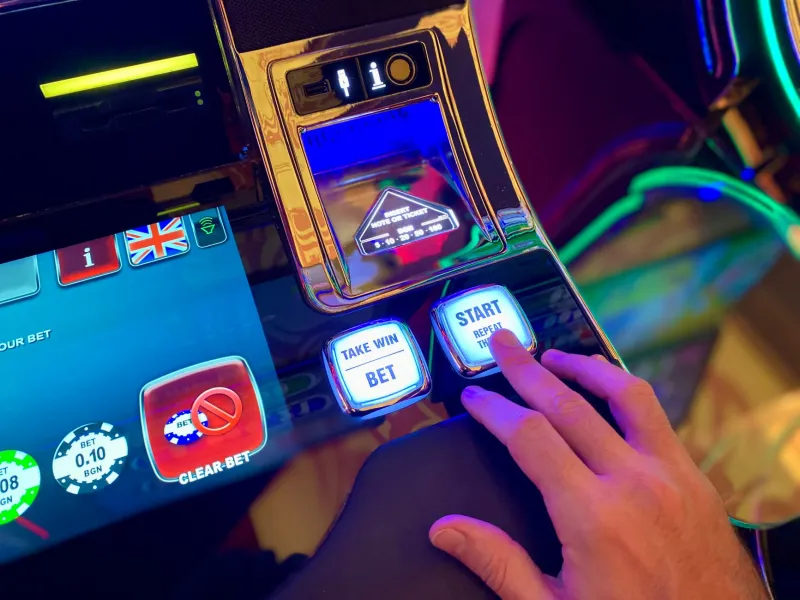
There's a moment every casino player knows. You're down — maybe fifty bucks, maybe five hundred — and something shifts in your head. It stops feeling like a night out and starts feeling like a debt. Not to the casino. To yourself. And the only way to clear it, your brain insists, is to keep playing until the score is settled.
This is the comeback trap. And in Australia, where gambling is woven into the social fabric more tightly than almost anywhere else on earth, it's quietly one of the most expensive habits around.
Why the Brain Frames Losses as Debts
Here's the thing about human psychology — we're not built for probability. We're built for fairness. From childhood, we develop an almost instinctive sense that if something bad happens, something good should follow to balance it out. Psychologists call this the "just-world hypothesis," and while it's a useful social tool, it's an absolute disaster at a casino.
When you lose money, your brain doesn't process it as a random statistical event. It processes it as an imbalance — a wrong that needs righting. The thought pattern goes something like: I've put in the time and the money, so a win is overdue. It feels like logic. It feels like patience. But statistically, it's complete nonsense.
Each spin of a pokie, each hand of blackjack, each roulette wheel is an independent event. The machine doesn't remember your bad run. The cards don't care that you've been sitting there for two hours. The odds reset completely every single time. The idea that a win is "due" — sometimes called the gambler's fallacy — has probably cost Australian players more money than any other single misconception in gambling history.
The Escalation Problem
Loss-chasing doesn't just keep you at the table longer. It changes how you play. And this is where things get genuinely dangerous.
When you're playing normally, you're making decisions based on what you can afford to risk. When you're chasing, you're making decisions based on what you need to win back. Those are very different mental frameworks. Chasing players tend to increase their bet sizes to speed up recovery — which also dramatically speeds up potential losses. They play games they don't know as well because those games feel like they offer better odds in the moment. They ignore their own time limits, spending limits, and gut instincts.
Research from the Australian Gambling Research Centre has consistently shown that loss-chasing is one of the strongest predictors of problem gambling. It's not just a symptom of a gambling problem — it can be the starting point of one.
What It Sounds Like in Your Head
Part of what makes loss-chasing so insidious is how reasonable it sounds when you're in it. Here are some of the most common internal scripts Aussie players report:
- "I just need to win back what I've lost and then I'll stop."
- "I was up earlier — I know this machine pays out."
- "If I leave now, I've wasted the whole night."
- "One big bet could fix everything."
Each of these thoughts has a kernel of emotional logic. But none of them hold up statistically. The money you've already lost is gone. It doesn't create any obligation from the casino. The only real question at any given moment is: should I keep risking money right now, given my current situation? And when you're down, stressed, and emotionally activated, the answer is almost always no.
The Sunk Cost Trap
Economists have a name for what's happening here: the sunk cost fallacy. It's the same reason people sit through terrible films because they paid for the ticket, or stay in bad jobs because they've already been there five years. We irrationally factor in past losses when making future decisions, even though those past losses are completely irrelevant to what happens next.
At the casino, the sunk cost fallacy is particularly brutal because the stakes are financial and immediate. That $200 you've already lost isn't coming back whether you play another hour or walk out the door right now. But your brain won't let it go. It keeps that number visible, like a debt ticker, pushing you toward one more attempt to clear it.
Recognising this pattern — actually naming it in the moment — is one of the most practical tools players can use. When you catch yourself thinking I need to win back what I've lost, try reframing it: That money is already gone. The question is whether I want to risk more.
Breaking the Cycle Before It Starts
The best time to deal with loss-chasing is before you sit down to play. Setting a clear loss limit — not just a vague sense of "I won't spend too much" but an actual number — gives you an external rule to follow when your internal logic starts getting cloudy.
A few habits that genuinely help:
Set a hard stop. Decide before you play exactly how much you're comfortable losing. When you hit that number, the session is over. Not paused. Over.
Take the cash out. If you're playing at a venue, leave your cards at home. If you're playing online, don't have your banking app open in the background. Friction is your friend when you're on tilt.
Name the feeling. When you notice that urgent, itchy need to keep playing after a loss, say it out loud or write it down: I'm chasing right now. Naming the behaviour creates just enough distance from it to make a different choice.
Use the tools available to you. Reputable online casinos operating in Australia offer deposit limits, session timers, and self-exclusion options. These aren't admissions of weakness — they're smart bankroll management tools. Use them.
When It's More Than Just a Bad Night
For most players, the occasional urge to chase a loss is normal and manageable. But if you're regularly finding yourself playing beyond your limits, borrowing money to gamble, or feeling genuinely distressed after losses, it's worth talking to someone.
Gambling Help Online (gamblinghelponline.org.au) offers free, confidential support 24/7. The National Gambling Helpline — 1800 858 858 — is another solid starting point. There's no shame in reaching out. The fact that loss-chasing is so psychologically powerful means it catches a lot of smart, rational people off guard.
The Honest Truth About Comebacks
Here's the part nobody really wants to hear: the casino doesn't have a comeback mechanism. There's no algorithm that detects when you're down and starts sending wins your way. There's no cosmic balance sheet. The house edge exists on every single bet, every single time, regardless of what happened before.
That doesn't mean gambling isn't fun — it absolutely can be. But fun requires staying in control of the experience. The moment you're playing to recover rather than playing to enjoy, the game has changed. And not in your favour.
Know the trap. Name it when you see it. And walk away while the night can still be a good one.