When Your Brain Goes Soft: The Science of Why Late-Night Gambling Hits Different

Photo by Photo by Syarafina Yusof on Unsplash on Unsplash
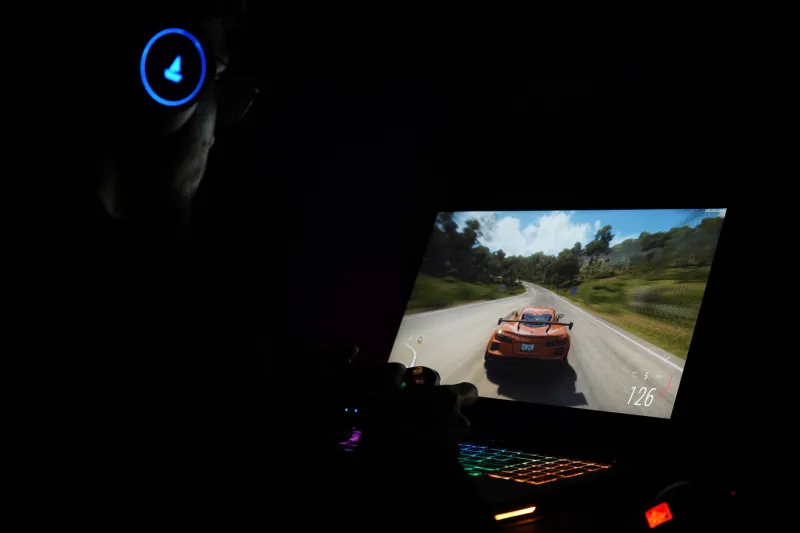
Picture this: it's somewhere past 2am. The house is quiet. You've got your phone or laptop open, a half-warm cup of tea on the bench, and you're just going to have a quick spin before bed. You're tired, sure, but you're not that tired. You know what you're doing.
Except — and this is the uncomfortable part — you probably don't.
Late-night casino sessions are one of the most consistently risky patterns in online gambling, and they're particularly common in Australia for reasons that go beyond simple habit. Understanding why exhausted brains make worse gambling decisions isn't just interesting science — it's genuinely useful information that could save you real money.
Australia's Particular Night-Owl Problem
Before getting into the neuroscience, it's worth acknowledging why Australian players are especially exposed to this issue.
Australia's time zone situation is genuinely awkward for online gaming. If you're following international sports — English Premier League, NBA, European tennis — you're often watching in the early hours of the morning. That means you're already awake, already engaged, already in a betting mindset, and already tired. It's a combination that's almost designed to produce bad decisions.
Then there's Australia's substantial shift-work culture. Nurses, tradies, hospitality workers, truck drivers — a significant portion of the workforce operates on non-standard hours. When your 'evening' starts at midnight and your 'wind-down' time hits at 4am, the late-night gaming window becomes your normal gaming window. And that creates its own set of risks.
What Sleep Deprivation Actually Does to Your Decision-Making
Here's the neuroscience, kept as plain as possible.
Your prefrontal cortex — the part of your brain responsible for rational thinking, impulse control, and evaluating risk — is extraordinarily sensitive to sleep deprivation. Even moderate tiredness (we're talking 17-18 hours without sleep, which is a completely normal late-night scenario) produces cognitive impairment roughly equivalent to a blood alcohol level of 0.05. That's the legal driving limit in Australia.
You wouldn't drive at that level. But you'd play casino games?
At the same time, the brain's reward circuitry — the dopamine pathways that make gambling feel exciting — doesn't shut down the same way. If anything, these systems become more reactive when you're exhausted, because the prefrontal cortex that normally moderates their influence is running at reduced capacity. The result: the highs feel higher, the urge to chase losses feels more urgent, and the rational voice saying "mate, stop" gets quieter and quieter.
The Dopamine Loop That Keeps You Up
Dopamine is the brain's anticipation chemical — it spikes not when you win, but when you might win. Every spin, every card flip, every dice roll produces a small dopamine hit just from the possibility of a positive outcome.
In a well-rested brain, the prefrontal cortex helps put this in context. It reminds you of your budget, your session limits, the time, your responsibilities in the morning. In a sleep-deprived brain, that contextualising capacity is compromised. The dopamine keeps firing, but the moderating voice is half-asleep.
This is why late-night sessions so often spiral. What starts as 'just a few spins' turns into an hour, then two, not because you planned it that way, but because your brain's braking system has gone offline while the accelerator is still running.
The 'I'm Fine' Illusion
One of the most well-documented effects of sleep deprivation is that it impairs your ability to accurately assess how impaired you are. Put simply: tired people consistently overestimate their own competence.
This is why the classic late-night internal monologue — "I'm tired but I'm fine, I know what I'm doing" — is itself a symptom of the problem. The confidence you feel at 3am is not a reliable indicator of your actual decision-making capacity. Research is very clear on this.
For Aussie players, this means the moment when you feel most certain you can handle a few more spins is often the moment you're least equipped to make that call.
Practical Strategies for Night-Owl Players
None of this means you can never play late. But it does mean you need to put safeguards in place before you're tired, not after.
Set a hard session time limit, not just a money limit. Deposit limits are useful, but a clock-based cutoff is more effective for late-night play. Decide before you log in: "I'm stopping at midnight regardless of where I'm at." Most reputable platforms let you set session time reminders — use them.
Never chase late. Make this a genuine rule for yourself. If you've had losses in a late-night session, the tiredness-amplified urge to get it back is not a signal to keep playing. It's a signal to close the browser.
Recognise your vulnerable windows. If you know you always play after watching a 1am EPL match, that's a high-risk window. Acknowledge it as such and adjust your limits accordingly — lower deposit limits, shorter session caps.
The 'sleep on it' test. If you're considering a decision — increasing your bet, making a deposit, trying one more session — and it's past midnight, wait until morning. If it still seems like a good idea after sleep, it probably is. If it seems ridiculous in daylight, that tells you something important.
Your Brain Deserves Better Than 3am
Late-night gaming isn't inherently wrong, but it carries risks that aren't talked about nearly enough in Australian gambling culture. The combination of our timezone quirks, our love of international sport, and our significant shift-work population means a lot of Aussie players are regularly gambling in conditions where their judgement is genuinely compromised.
Knowing that is half the battle. The other half is building habits that protect your tired self from your tired self's worst instincts.